
How Can I Kennel Train My Puppy at Night Without Stress?
ringing home a new puppy is exciting, but those first few nights can be challenging for both you and your furry friend. If you're wondering how to kennel train your puppy at night without causing stress, you're not alone. Thousands of new pet parents face this exact challenge, and the good news is that with the right approach, you can create a peaceful nighttime routine that works for everyone.
August 15, 2025 14:14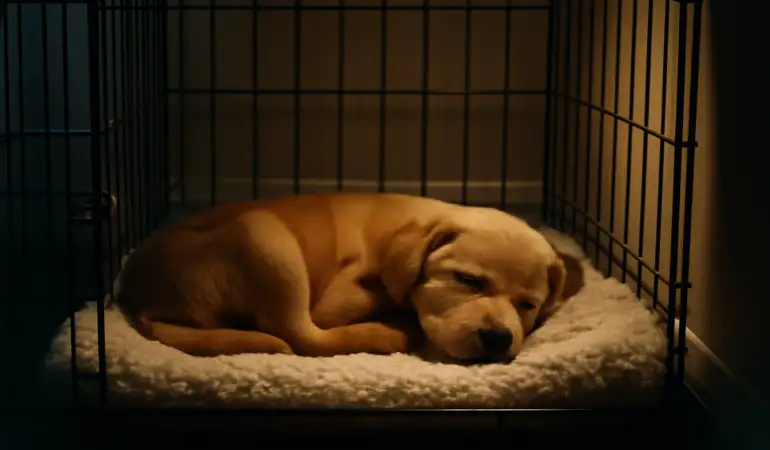
How Can I Kennel Train My Puppy at Night Without Stress?
Bringing home a new puppy is exciting, but those first few nights can be challenging for both you and your furry friend. If you're wondering how to kennel train your puppy at night without causing stress, you're not alone. Thousands of new pet parents face this exact challenge, and the good news is that with the right approach, you can create a peaceful nighttime routine that works for everyone.
Why Kennel Training at Night Is Essential for Your Puppy
Kennel training isn't just about convenience – it's about creating a safe, secure environment where your puppy can develop healthy sleep habits. Dogs are naturally den animals, meaning they instinctively seek out small, enclosed spaces for comfort and security. A properly introduced crate becomes your puppy's personal sanctuary, not a punishment.
The benefits of successful nighttime kennel training include:
- Safety: Prevents destructive behavior and potential hazards when you're sleeping
- House training acceleration: Dogs naturally avoid soiling their sleeping area
- Better sleep for everyone: Reduces nighttime disruptions and anxiety
- Routine establishment: Creates predictable patterns that puppies thrive on
- Future travel preparation: Makes car trips and hotel stays much easier
Choosing the Right Crate for Nighttime Success
The foundation of stress-free kennel training starts with selecting the appropriate crate. Your puppy's crate should be large enough for them to stand up, turn around, and lie down comfortably, but not so large that they can use one end as a bathroom.
Crate Size Guidelines by Puppy Weight:
- Up to 25 lbs: 24-inch crate
- 26-40 lbs: 30-inch crate
- 41-70 lbs: 36-inch crate
- 71-90 lbs: 42-inch crate
- Over 90 lbs: 48-inch crate
Consider purchasing an adult-sized crate with adjustable dividers, allowing you to expand the space as your puppy grows. This saves money and maintains the proper crate-to-puppy ratio throughout their development.
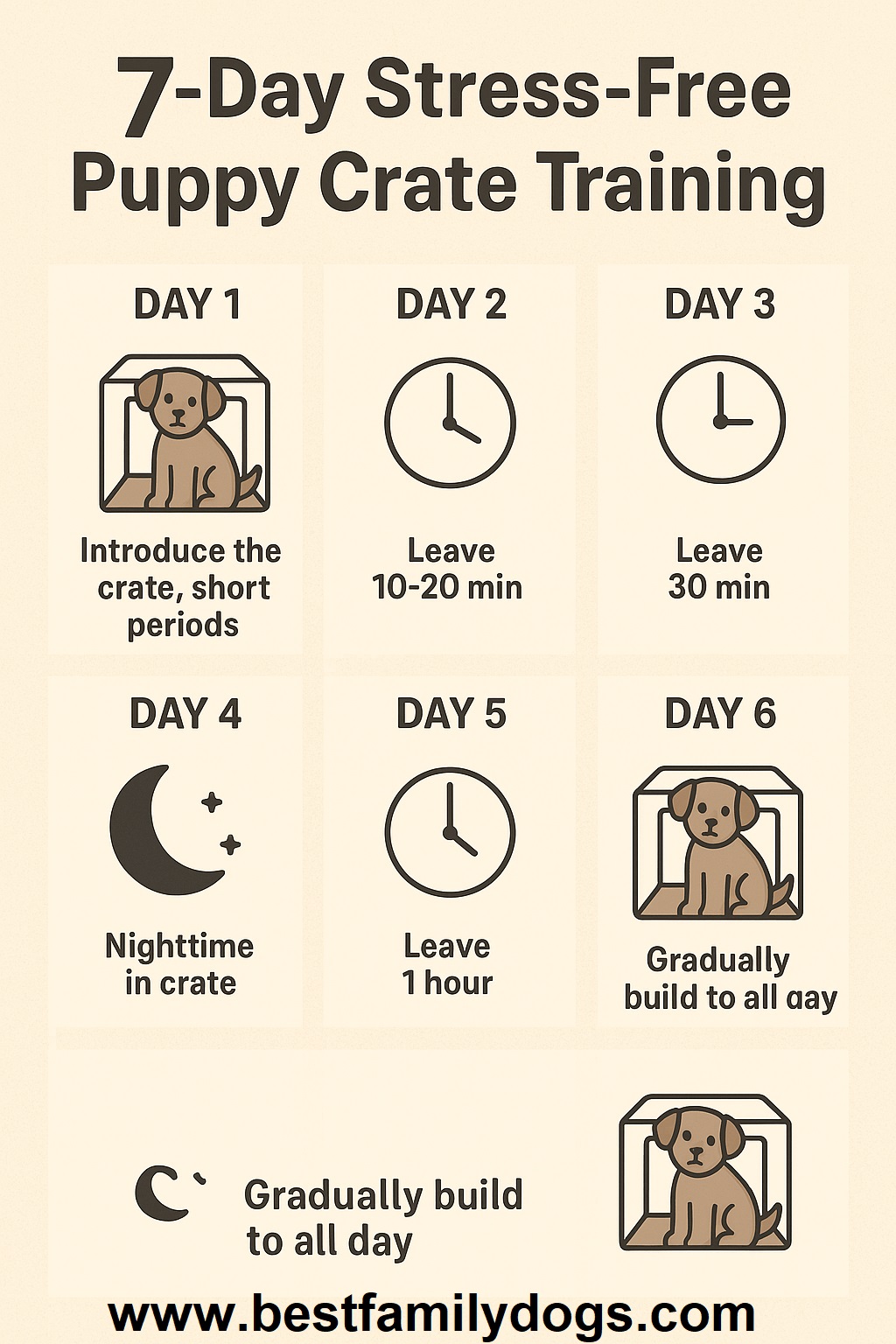
The 7-Day Stress-Free Kennel Training Schedule
Success comes from gradual introduction rather than forcing your puppy into the crate on night one. Here's a proven week-by-week approach:
Days 1-2: Crate Introduction
- Place the crate in a central living area with the door open
- Put comfortable bedding and a favorite toy inside
- Feed meals near or inside the crate
- Allow free exploration without closing the door
- Reward any voluntary crate entry with treats and praise
Days 3-4: Short Confinement
- Close the door for 5-10 minutes while you're nearby
- Gradually increase duration to 30 minutes
- Practice during daytime when your puppy is naturally tired
- Always let them out calmly – no excited reunions that create anxiety about separation
Days 5-6: Extended Periods
- Leave your puppy crated for 1-2 hours during the day
- Begin placing the crate in your bedroom for nighttime
- Stay nearby for the first few nights to provide reassurance
- Ignore minor whining but respond to genuine distress signals
Day 7 and Beyond: Full Night Training
- Move the crate to its permanent nighttime location
- Establish a consistent bedtime routine
- Gradually reduce your presence if the crate isn't staying in your bedroom
 Creating the Perfect Nighttime Environment
The physical setup of your puppy's nighttime space significantly impacts their comfort level and willingness to settle down.
Location Considerations:
Bedroom Placement: Many successful pet parents start with the crate in their bedroom, providing comfort through proximity without encouraging dependence.
Living Room Alternative: If bedroom placement isn't possible, choose a quiet area away from household traffic but not completely isolated.
Temperature Control: Ensure the area maintains a comfortable temperature between 65-75°F. Puppies can't regulate body temperature as effectively as adult dogs.
Essential Crate Accessories:
- Comfortable bedding: Choose washable, appropriately-sized bedding that won't bunch up or create safety hazards
- Safe toys: One or two quiet toys can provide comfort without overstimulation
- Water considerations: Generally avoid water bowls at night to prevent accidents, but ensure adequate hydration during the day
- Cover options: A light blanket over three sides of the crate can create a den-like atmosphere
The Pre-Bedtime Routine That Prevents Nighttime Stress
Consistency is key to helping your puppy understand when it's time to settle down. Establish a calming routine that signals bedtime is approaching.
Recommended Evening Schedule:
6:00 PM: Final meal of the day (allows time for digestion) 7:30 PM: Active play session to tire them out 8:30 PM: Calm indoor activities and training 9:00 PM: Last potty break outside 9:15 PM: Into the crate with a special bedtime treat 9:30 PM: Lights out and quiet time begins
Energy Management Tips:
Mental stimulation is just as tiring as physical exercise. Consider puzzle toys, basic training sessions, or sniffing games to help your puppy wind down naturally. Avoid high-energy play right before bedtime, as this can make settling down more difficult.
Handling Common Nighttime Challenges
Even with perfect preparation, most puppies will experience some adjustment period. Here's how to handle the most common issues:
Whining and Crying
Normal vs. Concerning: Brief whining (5-10 minutes) is normal as puppies adjust. Persistent, escalating distress may indicate genuine needs.
Response Strategy: Wait out brief protests, but respond to signs of genuine distress like intense crying, panting, or attempts to escape the crate.
Mistakes to Avoid: Don't let your puppy out during minor complaints, as this teaches them that crying gets results. However, don't ignore genuine distress signals either.
Midnight Potty Breaks
Young puppies (under 12 weeks) typically need one nighttime potty break. Keep these interactions calm and boring:
- Use minimal lighting
- Avoid talking or playing
- Go directly outside and back to the crate
- Gradually extend the time between nighttime breaks as they mature
Separation Anxiety Signs
Watch for excessive drooling, destructive behavior, or intense panic responses. These may indicate separation anxiety rather than normal adjustment difficulties and might require professional guidance.
Age-Specific Kennel Training Considerations
Your approach should adapt to your puppy's developmental stage:
8-12 Weeks Old:
- Expect 1-2 nighttime potty breaks
- Keep crate very close to your bed initially
- Focus on positive associations rather than extended confinement
- Be patient with accidents and adjustment time
3-4 Months Old:
- Can typically sleep through the night
- May test boundaries with increased whining
- Ready for more structured training approaches
- Beginning to develop stronger preferences and habits
4-6 Months Old:
- Should be sleeping through the night consistently
- Can handle crate placement anywhere in the house
- May experience adolescent behavioral changes
- Ready for advanced crate training concepts
Troubleshooting: When Things Don't Go as Planned
Not every puppy follows the textbook timeline. Here are solutions for common setbacks:
The Persistent Crier
Some puppies are more vocal than others. Try:
- Moving the crate closer to your bed temporarily
- Using a white noise machine to muffle household sounds
- Ensuring the puppy is truly tired before crating
- Checking for medical issues if crying is excessive
The Escape Artist
Puppies who consistently try to escape may need:
- A different crate style (solid walls vs. wire)
- Better positive associations with the crate space
- More gradual introduction periods
- Evaluation of crate size and comfort
Regression After Success
Sometimes puppies who were doing well suddenly start having issues again. Common causes include:
- Changes in household routine
- Growth spurts affecting comfort
- Seasonal changes affecting sleep patterns
- Need for adjusted exercise or feeding schedules
Building Long-Term Success
The goal isn't just to get through the puppy phase, but to establish lifelong positive associations with crate time. Focus on:
Maintaining Positive Associations
- Never use the crate as punishment
- Continue providing special treats or toys for crate time
- Regularly practice daytime crating to maintain skills
- Keep the crate available even after house training is complete
Gradual Independence
As your puppy matures, you can slowly increase their freedom:
- Start with supervised house access for short periods
- Gradually extend unsupervised time outside the crate
- Maintain the crate as an available retreat space
- Monitor for any regression in house training or destructive behavior
Red Flags: When to Seek Professional Help
While most puppies adjust to crate training with patience and consistency, some situations warrant professional intervention:
- Extreme panic responses: Excessive drooling, self-injury, or destructive attempts to escape
- No progress after 2-3 weeks: Continued intense distress despite following proper protocols
- Regression with physical symptoms: Sudden accidents combined with changes in appetite or behavior
- Aggressive responses: Growling, snapping, or biting related to crate interactions
A certified dog trainer or veterinary behaviorist can help identify underlying issues and develop customized solutions.
Frequently Asked Questions
How long can I leave my puppy in the crate at night? Puppies can typically hold their bladder for their age in months plus one hour. However, nighttime is different – most puppies can sleep for longer periods than their daytime capacity suggests.
Should I put water in the crate overnight? Generally no, as this increases the likelihood of nighttime accidents. Ensure your puppy is well-hydrated during the day and has a final drink before their last potty break.
What if my puppy has an accident in the crate? Clean thoroughly with enzymatic cleaner, check that the crate isn't too large, and consider whether they need more frequent nighttime breaks. Don't punish accidents – they're part of the learning process.
Can I move the crate once my puppy is comfortable? Yes, but do it gradually. Move it a few feet each night rather than making sudden location changes that might cause anxiety.
Your Path to Peaceful Nights
Kennel training your puppy at night doesn't have to be stressful for either of you. Success comes from patience, consistency, and understanding your individual puppy's needs. Remember that every puppy is different – some adapt within days while others need several weeks to feel completely comfortable.
The investment in proper nighttime crate training pays dividends throughout your dog's life. You'll have a dog who travels well, feels secure when left alone, and has learned healthy independence skills. Most importantly, you'll both get the rest you need to enjoy all the wonderful adventures that come with puppy parenthood.
Start tonight with small, positive steps. Your puppy wants to please you and feel secure – with the right approach, that crate will become their favorite retreat, and you'll both sleep soundly knowing you've built a foundation for lifelong success together.
User Comments (0)




Advertisement Zone
Interested in advertising here?
Contact us at support@bestfamilydogs.com
Advertisement Zone
Interested in advertising here?
Contact us at support@bestfamilydogs.com
Advertisement Zone
Interested in advertising here?
Contact us at support@bestfamilydogs.com