
What Is a Crate Schedule for a New Puppy?
Bringing home a new puppy is an exciting milestone, but it also comes with the responsibility of establishing proper training routines. One of the most effective tools for house training and creating structure is implementing a crate schedule for puppy training. Understanding how to properly schedule crate time can make the difference between a well-adjusted dog and ongoing behavioral challenges.
August 21, 2025 06:59
Bringing home a new puppy is an exciting milestone, but it also comes with the responsibility of establishing proper training routines. One of the most effective tools for house training and creating structure is implementing a crate schedule for puppy training. Understanding how to properly schedule crate time can make the difference between a well-adjusted dog and ongoing behavioral challenges.
Understanding the Crate Schedule for Puppy Training
A crate schedule for puppy training is a structured timeline that outlines when your puppy should be in their crate versus when they should be out for play, meals, potty breaks, and socialization. This schedule serves as the foundation for house training, provides your puppy with a sense of security, and helps establish healthy sleep patterns.
The crate becomes your puppy's safe haven – a place where they can retreat when feeling overwhelmed and a tool that prevents destructive behavior when you cannot supervise them directly. However, the key to success lies in implementing the schedule correctly and consistently.
Why Your Puppy Needs a Structured Crate Schedule
Puppies thrive on routine and predictability. A well-planned crate schedule for puppy training offers numerous benefits:
House Training Acceleration: Dogs naturally avoid soiling their sleeping area. By following a consistent schedule, you'll teach your puppy to hold their bladder and bowels until appropriate potty times.
Reduced Separation Anxiety: Gradually increasing crate time helps your puppy become comfortable being alone, preventing destructive behaviors that stem from anxiety.
Better Sleep Patterns: Puppies need 18-20 hours of sleep per day. A structured schedule ensures they get adequate rest for proper development.
Safety and Security: When you cannot supervise your puppy, the crate prevents them from chewing dangerous items or getting into trouble around the house.
Faster Adaptation: New puppies feel overwhelmed in unfamiliar environments. The crate provides a consistent, safe space that becomes their territory.
Age-Appropriate Crate Schedule Guidelines
8-10 Week Old Puppies
At this young age, puppies have tiny bladders and can typically hold their waste for only 2-3 hours maximum. Your crate schedule for puppy training should include:
- Crate Time: 2-3 hours maximum at a stretch
- Potty Breaks: Every 2 hours during the day
- Overnight: May need one middle-of-night potty break
- Total Crate Time: 16-18 hours per day (including overnight sleep)
10-16 Week Old Puppies
As your puppy grows, their bladder capacity increases. Adjust your schedule accordingly:
- Crate Time: 3-4 hours maximum during the day
- Potty Breaks: Every 3-4 hours
- Overnight: Should sleep through the night (7-8 hours)
- Total Crate Time: 14-16 hours per day
4-6 Month Old Puppies
Older puppies can handle longer periods and have better bladder control:
- Crate Time: 4-5 hours maximum during the day
- Potty Breaks: Every 4-5 hours
- Overnight: 8+ hours comfortably
- Total Crate Time: 12-14 hours per day
Sample Daily Crate Schedule for Puppy Training
Here's a practical example of how to structure your day:
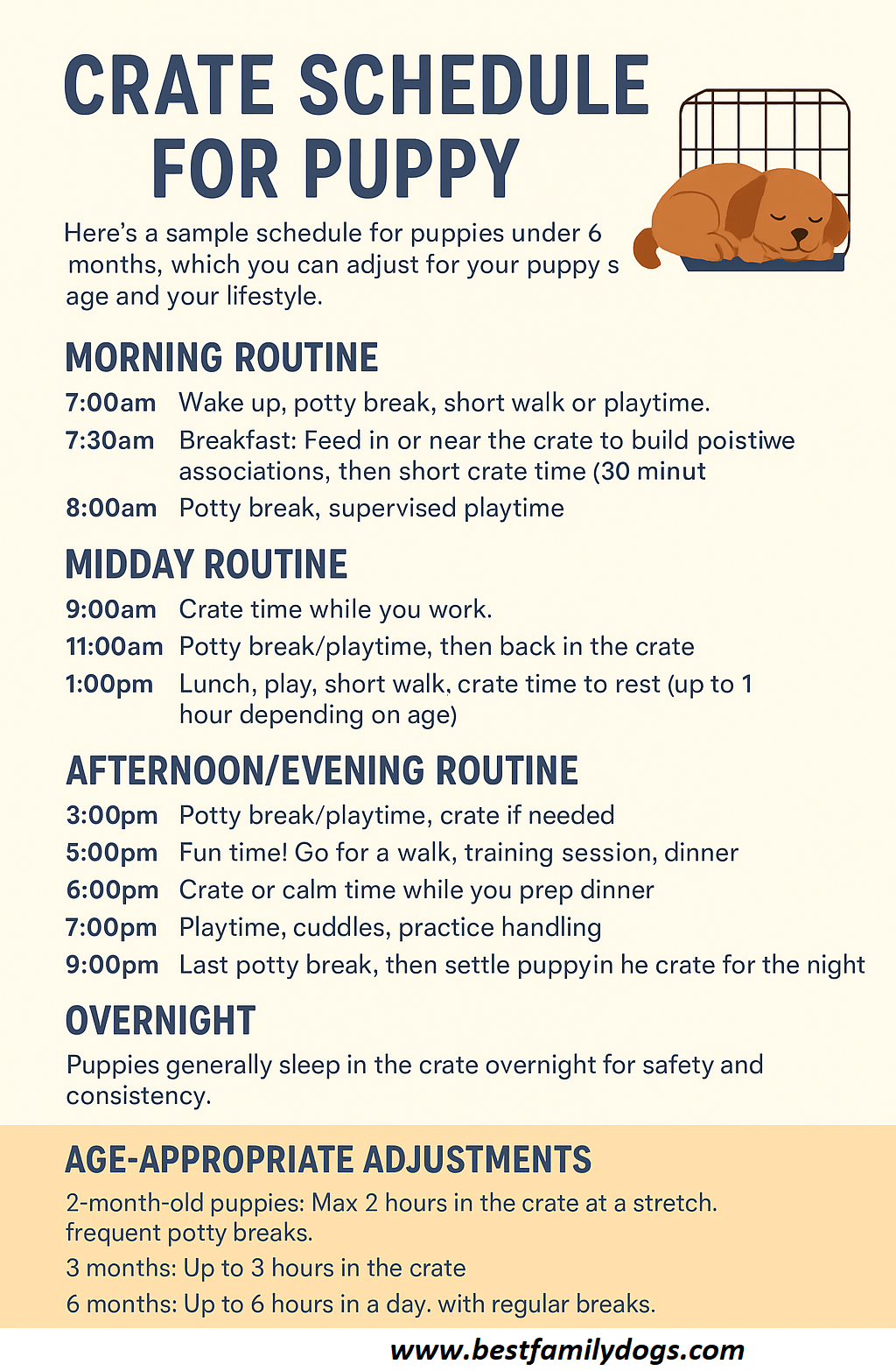 Remember, this schedule should be adjusted based on your puppy's individual needs and your family's routine.
Essential Tips for Successful Crate Training
Making the Crate Comfortable
Your puppy's crate should be a welcoming space. Include a comfortable bed or blanket, ensure proper ventilation, and place it in a quiet but not isolated area of your home. The crate should be large enough for your puppy to stand, turn around, and lie down, but not so large that they can soil one end and sleep in the other.
Gradual Introduction
Never force your puppy into the crate. Start by feeding meals near the crate, then inside with the door open. Gradually increase the time spent inside before closing the door. This positive association makes the crate schedule for puppy training much more effective.
Consistency Is Key
Every family member should follow the same schedule and rules. Inconsistency confuses your puppy and slows down the training process. Post the schedule where everyone can see it and stick to the timings as closely as possible.
Positive Reinforcement
Always use positive reinforcement when your puppy enters the crate willingly or remains calm inside. Treats, praise, and favorite toys help create positive associations with crate time.
Common Mistakes to Avoid
Overusing the Crate: Never leave your puppy crated for longer than they can physically hold their bladder. This leads to accidents and undermines house training efforts.
Using the Crate as Punishment: The crate should never be associated with negative experiences. It's a safe space, not a prison.
Ignoring Distress Signals: While some initial whining is normal, excessive distress may indicate the need to slow down the training process.
Inconsistent Timing: Irregular schedules confuse puppies and extend the training period unnecessarily.
Troubleshooting Your Crate Schedule
If your puppy continues having accidents in the crate, you may be leaving them too long or the crate may be too large. If they refuse to enter the crate, slow down the introduction process and use higher-value treats or toys.
Some puppies may experience separation anxiety, exhibiting excessive barking, whining, or destructive behavior. In these cases, practice very short departures and gradually increase the time away.
When to Adjust Your Schedule
Your crate schedule for puppy training isn't set in stone. Monitor your puppy's behavior and adjust accordingly. Signs that indicate schedule changes include:
- Consistent accidents at specific times
- Excessive anxiety or distress
- Changes in your work schedule
- Your puppy's growing maturity and improved bladder control
Transitioning Away from the Crate Schedule
As your puppy matures and demonstrates reliable house training, you can gradually reduce crate time. Start by leaving them out for short periods in a puppy-proofed room, then gradually increase their freedom as they prove trustworthy.
Most dogs can transition to minimal crate use by 12-18 months of age, though many continue to enjoy their crate as a comfortable retreat throughout their lives.
Final Thoughts on Crate Schedules for Puppies
Implementing an effective crate schedule for puppy training requires patience, consistency, and understanding of your individual puppy's needs. While the initial weeks may be challenging, the long-term benefits of proper crate training create a foundation for a lifetime of good behavior and house training success.
Remember that every puppy is unique, and what works for one may need adjustment for another. Stay flexible, remain patient, and celebrate the small victories along the way. With dedication to your crate schedule, you'll soon have a well-trained, confident, and happy companion who views their crate as their special sanctuary.
The investment in time and effort you make now with consistent crate scheduling will pay dividends in the form of a well-behaved adult dog who understands boundaries, has excellent house training, and feels secure in their environment.
User Comments (0)




Advertisement Zone
Interested in advertising here?
Contact us at support@bestfamilydogs.com
Advertisement Zone
Interested in advertising here?
Contact us at support@bestfamilydogs.com
Advertisement Zone
Interested in advertising here?
Contact us at support@bestfamilydogs.com